Introduction
As organizations adopt microservices, cloud-native applications, and DevOps practices, managing hundreds or even thousands of containers manually becomes challenging. While Docker simplifies application packaging through containers, it does not provide comprehensive capabilities for managing containerized applications at scale.
Definition
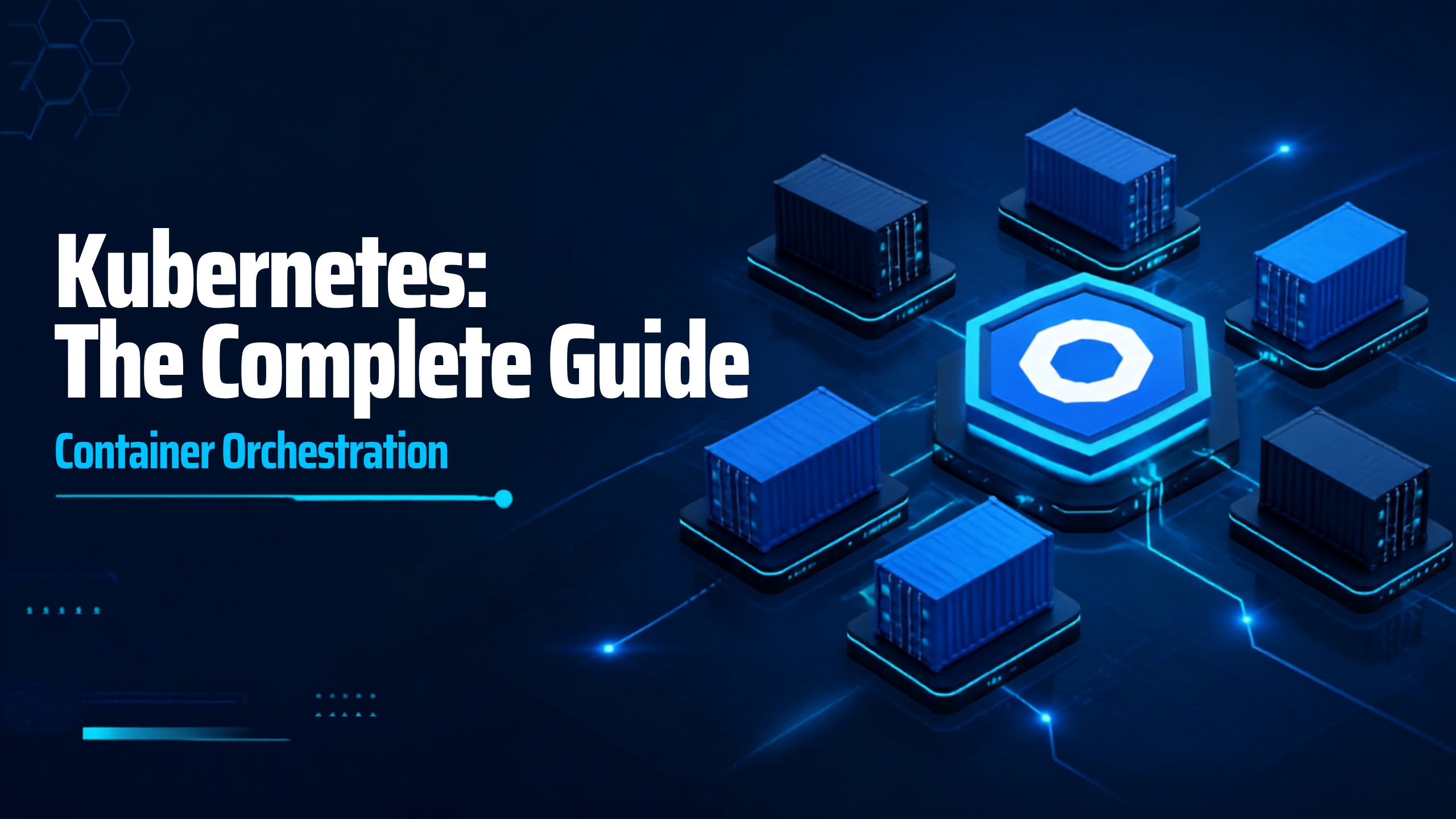
Kubernetes is an open-source container orchestration platform that automates the deployment, scaling, networking, monitoring, and lifecycle management of containerized applications.
Architecture
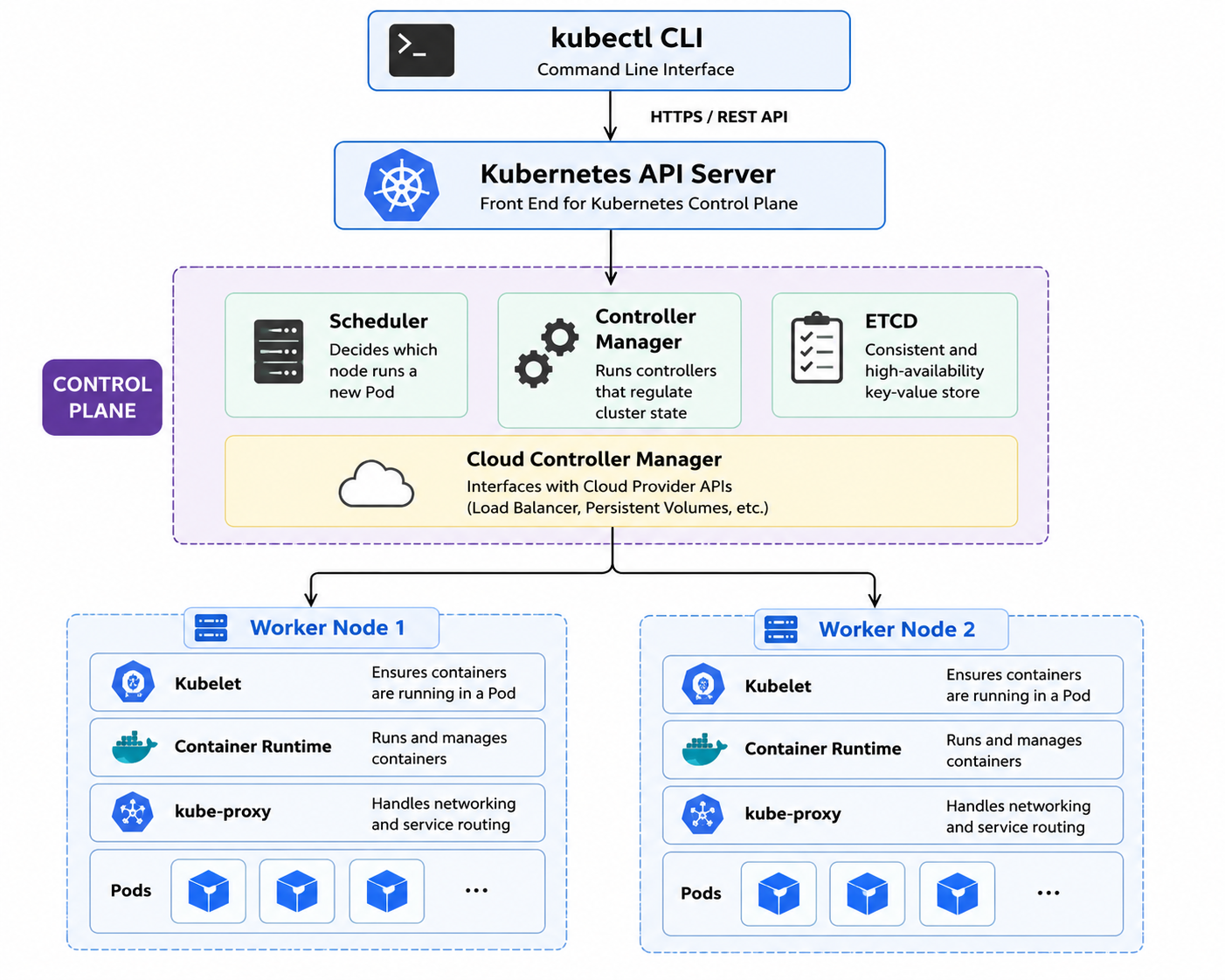
Working
Step 1: Create a Container Image
Step 2: Push Image to Registry
Step 3: Create Deployment YAML
Step 4: Deploy Application
Step 5: Scheduler Assigns Pods
Step 6: Pods Start Running
Step 7: Expose Application
Step 8: Auto Scaling & Self-Healing
Advantages
- Automatic Scaling Scales applications up or down based on demand.
- Self-Healing Automatically restarts failed containers and replaces unhealthy Pods.
- High Availability Distributes workloads across multiple nodes to reduce downtime.
- Load Balancing Balances incoming traffic across healthy Pods.
- Rolling Updates Deploy new versions with minimal or no downtime.
- Efficient Resource Utilization Optimizes CPU and memory usage across the cluster.
- Cloud Agnostic Runs on AWS, Azure, Google Cloud, and on-premises environments.
- Declarative Configuration Infrastructure and application state can be defined as code using YAML manifests.
Disadvantages
- Steep Learning Curve Kubernetes concepts and components require time to master.
- Complex Setup Self-managed clusters require planning, networking, and security configuration.
- Resource Overhead The control plane and supporting services consume compute resources.
- Troubleshooting Complexity Diagnosing issues across multiple nodes and services can be challenging.
- Security Management Requires careful configuration of RBAC, network policies, and secrets.
Tools
| Tool | Purpose |
| Kubernetes (K8s) | Container orchestration |
| kubectl | Kubernetes command-line tool |
| Minikube | Local Kubernetes cluster |
| Kind | Kubernetes in Docker for local development |
| Helm | Kubernetes package manager |
| Argo CD | GitOps continuous delivery |
| Prometheus | Monitoring |
| Grafana | Dashboards and visualization |
| Istio | Service mesh |
| K9s | Kubernetes terminal UI |
| Lens | Kubernetes IDE |
| Harbor | Container image registry |
| Trivy | Vulnerability scanning |
| Terraform | Infrastructure provisioning |
Interview Questions
Basic
- What is Kubernetes?
Kubernetes is an open-source platform for automating the deployment, scaling, and management of containerized applications. - What is a Pod?
A Pod is the smallest deployable unit in Kubernetes and can contain one or more containers. - What is kubectl?
kubectl is the command-line tool used to interact with Kubernetes clusters. - What is a Deployment?
A Deployment manages the desired number of Pod replicas and supports rolling updates and rollbacks. - What is a Service in Kubernetes?
A Service provides a stable network endpoint for accessing one or more Pods.
Conclusion
Kubernetes has become the backbone of modern cloud-native application deployment by providing automated container orchestration, scalability, resilience, and high availability. Combined with Docker, CI/CD pipelines, and Infrastructure as Code tools, Kubernetes enables organizations to build reliable, secure, and highly scalable applications.
Whether you’re aiming to become a DevOps Engineer, Cloud Engineer, SRE, or Platform Engineer, mastering Kubernetes is a valuable investment that aligns with current industry demand.
🚀 Master Kubernetes with SecureFlow InfoTech Pvt. Ltd.
Take your DevOps and Cloud career to the next level with hands-on Kubernetes Training from SecureFlow InfoTech Pvt. Ltd.
What You’ll Learn
- Kubernetes Architecture
- Pods, Deployments, and Services
- ConfigMaps and Secrets
- Namespaces and RBAC
- Persistent Volumes and Storage
- Networking and Ingress
- Auto Scaling and Self-Healing
- Helm Charts
- Monitoring with Prometheus & Grafana
- Kubernetes Security Best Practices
- CI/CD Integration with Kubernetes
- Real-Time Projects and Interview Preparation
Why Choose SecureFlow InfoTech Pvt. Ltd.?
- Certified Industry Trainers
- Hands-on Real-Time Projects
- Online & Offline Training
- Placement Assistance
- Resume Building and Mock Interviews
- Flexible Batch Timings
- Industry-Oriented Curriculum
Courses Offered
- DevOps (AWS, Azure & GCP)
- Kubernetes & Docker
- Cybersecurity (VAPT)
- Cybersecurity (SOC & SIEM)
- Azure Data Engineering
📞 Contact: +91 91339 19666 | +91 91884 94949
Build, Deploy, Scale, and Manage Modern Applications with Kubernetes—Join SecureFlow InfoTech Pvt. Ltd. Today