Introduction
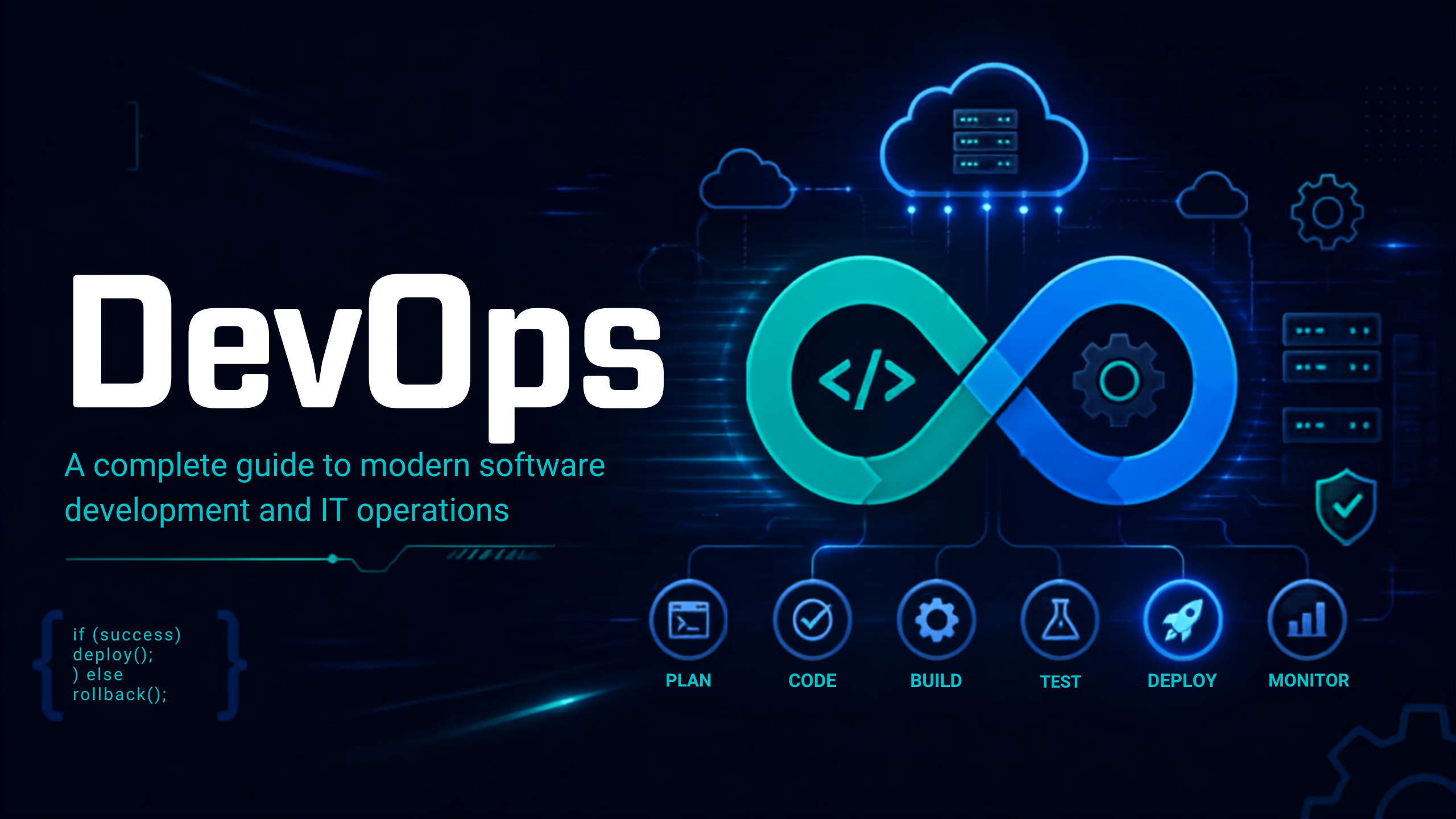
In today’s fast-paced digital world, businesses need to deliver high-quality software faster while ensuring reliability, scalability, and security. Traditional software development often faced challenges such as slow release cycles, poor collaboration between development and operations teams, and frequent deployment failures. To overcome these issues, organizations have adopted DevOps, a modern approach that combines software development (Dev) and IT operations (Ops) into a unified workflow.
Definition
DevOps is a software development methodology that integrates Development (Dev) and Operations (Ops) to improve collaboration, automate workflows, and deliver applications faster with greater reliability and quality.
Architecture
Planning
|
Source Code
(Git/GitHub)
|
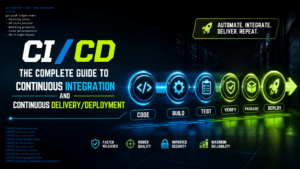
Continuous Integration (CI)
(Jenkins / GitHub Actions)
|
Build & Testing
(Maven / Gradle / JUnit)
|
Artifact Repository
(Nexus / JFrog Artifactory)
|
Infrastructure as Code
(Terraform / Ansible / CloudFormation)
|
Containerization (Docker)
|
Container Orchestration (Kubernetes)
|
Continuous Deployment (CD)
|
Monitoring & Logging
(Prometheus, Grafana, ELK, Splunk)
Working
Step 1: Planning
Step 2: Source Code Management
Step 3: Continuous Integration (CI)
Step 4: Build & Testing
Step 5: Artifact Management
Step 6: Infrastructure Provisioning
Step 7: Containerization
Step 8: Container Orchestration
Step 9: Continuous Deployment (CD)
Step 10: Monitoring & Feedback
Advantages
DevOps offers numerous benefits for organizations.
- Faster software delivery.
- Improved collaboration between development and operations teams.
- Reduced deployment failures.
- Increased automation.
- Higher software quality.
- Faster issue resolution.
- Better scalability.
- Improved customer satisfaction.
- Continuous monitoring and feedback.
- Supports cloud-native application development.
Disadvantages
Despite its benefits, DevOps also has some challenges.
- Initial implementation can be complex.
- Requires cultural changes within organizations.
- Continuous learning is necessary.
- Tool integration may require expertise.
- Automation setup can be time-consuming.
- Security must be integrated carefully (DevSecOps).
- Small teams may face resource constraints.
Tools
| Tool | Purpose |
| Git | Version control |
| GitHub | Code repository and collaboration |
| GitLab | Source code management and CI/CD |
| Jenkins | Continuous Integration and Continuous Deployment |
| GitHub Actions | Workflow automation |
| Docker | Containerization |
| Kubernetes | Container orchestration |
| Terraform | Infrastructure as Code |
| Ansible | Configuration management and automation |
| Maven | Build automation |
| Nexus Repository | Artifact management |
| Prometheus | Monitoring and alerting |
| Grafana | Data visualization and dashboards |
| ELK Stack (Elasticsearch, Logstash, Kibana) | Log management and analysis |
| SonarQube | Code quality and security analysis |
Interview Questions
1. What is DevOps?
Answer:
DevOps is a culture and set of practices that combine software development and IT operations to automate software delivery and improve collaboration.
2. What is CI/CD?
Answer:
- Continuous Integration (CI): Automatically builds and tests code changes.
- Continuous Delivery/Deployment (CD): Automates the release and deployment of applications.
3. What is Infrastructure as Code (IaC)?
Answer:
Infrastructure as Code is the practice of managing and provisioning infrastructure using code instead of manual processes.
4. What is Docker?
Answer:
Docker is a containerization platform that packages applications and their dependencies into portable containers.
5. What is Kubernetes?
Answer:
Kubernetes is a container orchestration platform used to deploy, scale, and manage containerized applications.
6. What is the difference between Continuous Delivery and Continuous Deployment?
Answer:
- Continuous Delivery: Code is automatically prepared for release but requires manual approval before production deployment.
- Continuous Deployment: Code changes are automatically deployed to production without manual intervention after passing all tests.
Conclusion
DevOps has transformed the way organizations develop, deploy, and manage software applications. By promoting collaboration, automation, continuous integration, continuous delivery, and continuous monitoring, DevOps enables businesses to release high-quality software quickly and reliably. Mastering DevOps tools and practices opens the door to rewarding careers in software engineering, cloud computing, and IT operations, making it one of the most in-demand skill sets in today’s technology landscape.
CTA
🚀 Build Your DevOps Career with SecureFlow Infotech
Become an industry-ready DevOps Engineer with SecureFlow Infotech’s DevOps with Multi-Cloud Training Program. Gain hands-on experience with AWS, Azure, GCP, Docker, Kubernetes, Jenkins, Terraform, Git, and CI/CD pipelines through real-world projects and expert guidance.
What You’ll Learn
- DevOps Fundamentals
- Git & GitHub
- Linux Administration
- Jenkins CI/CD
- Docker & Kubernetes
- Terraform & Infrastructure as Code
- Ansible Automation
- AWS DevOps
- Azure DevOps
- GCP DevOps
- Monitoring with Prometheus & Grafana
- Real-Time Projects & Interview Preparation
Why Choose SecureFlow Infotech?
- ✅ Certified & Experienced Trainers
- ✅ Hands-on Practical Labs
- ✅ Multi-Cloud Training (AWS, Azure & GCP)
- ✅ Real-Time Industry Projects
- ✅ Placement Assistance
- ✅ Resume Building & Mock Interviews
- ✅ Online & Offline Training
- ✅ Flexible Batch Timings
📞 Contact Us:
+91 91339 19666
+91 91884 94949
Join SecureFlow Infotech today and gain the practical DevOps skills needed to excel as a DevOps Engineer and accelerate your career in cloud computing and software delivery.