Introduction
Application Programming Interfaces (APIs) are the backbone of modern software, enabling communication between web applications, mobile apps, cloud services, IoT devices, and third-party platforms. From online banking and e-commerce to healthcare and social media, APIs power seamless data exchange and business functionality.
Definition
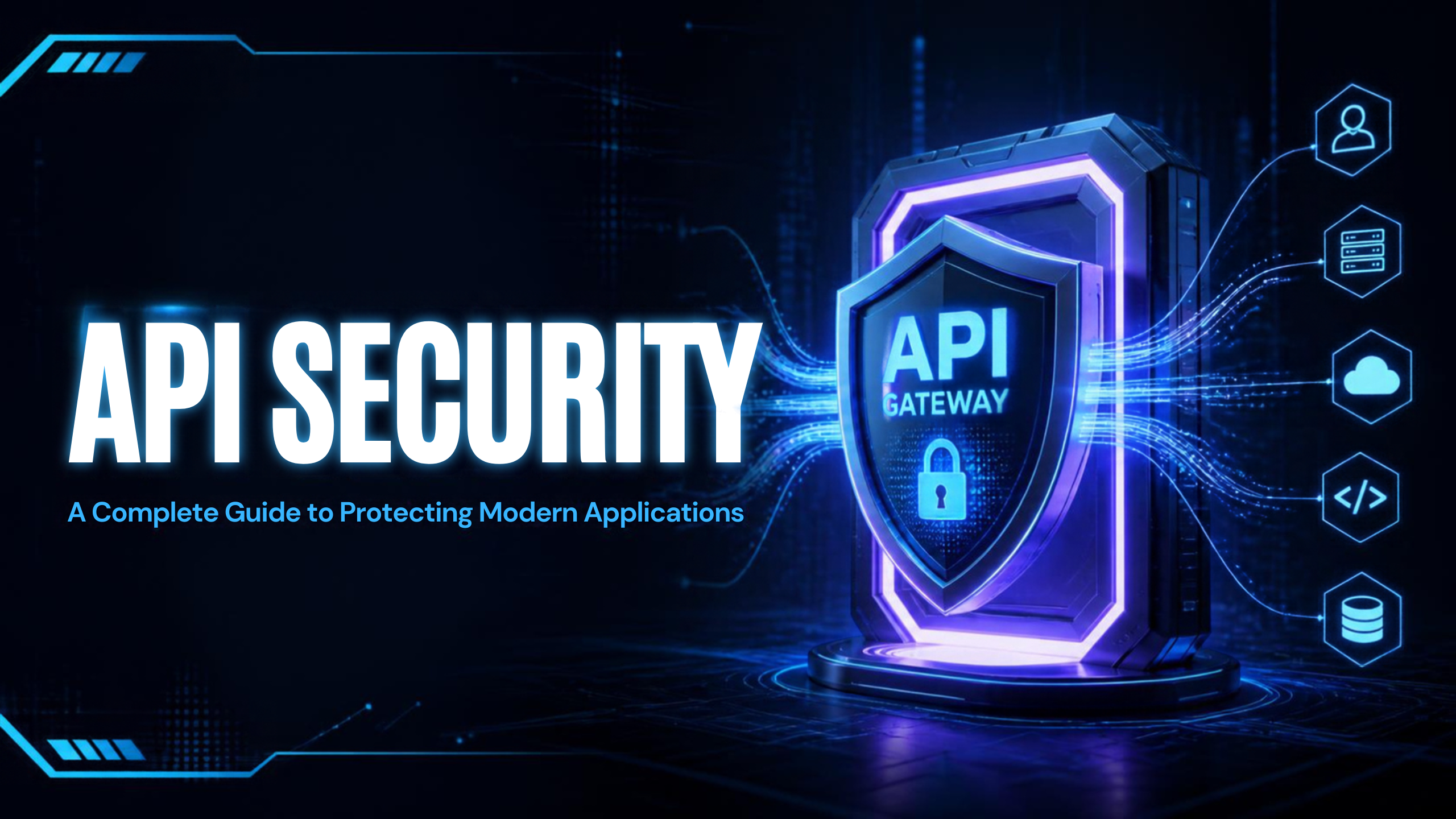
API Security is the practice of protecting Application Programming Interfaces (APIs) from unauthorized access, misuse, attacks, and data breaches. It involves implementing security controls such as authentication, authorization, encryption, input validation, rate limiting, logging, and continuous monitoring to ensure APIs remain secure throughout their lifecycle.
Architecture
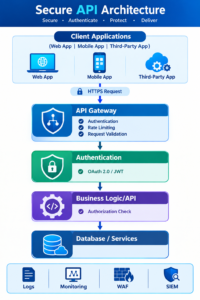
Working
Step 1: Client Sends API Request
Step 2: Secure Connection
Step 3: Authentication
Step 4: Authorization
Step 5: Input Validation
Step 6: Business Logic Processing
Step 7: Secure Response
Step 8: Logging & Monitoring
Advantages
Implementing API Security offers numerous benefits.
- Protects sensitive data from unauthorized access.
- Prevents common API attacks.
- Ensures secure communication using HTTPS.
- Supports regulatory compliance (GDPR, HIPAA, PCI-DSS).
- Improves customer trust.
- Reduces the risk of data breaches.
- Enables secure third-party integrations.
- Detects suspicious activities through monitoring.
- Protects business logic from abuse.
- Enhances overall application security.
Disadvantages
API Security also comes with certain challenges.
- Increased implementation complexity.
- Additional infrastructure costs.
- Performance overhead due to authentication and encryption.
- Continuous monitoring and maintenance required.
- Frequent updates to address new vulnerabilities.
- Token and key management can be complex.
- Improper configurations may introduce security gaps.
Tools
The following tools are widely used for API Security testing and management.
| Tool | Purpose |
| Postman | API development and testing |
| Burp Suite | Manual API penetration testing |
| OWASP ZAP | Automated API vulnerability scanning |
| Insomnia | REST and GraphQL API testing |
| SoapUI | Functional and security testing for SOAP/REST APIs |
| Swagger/OpenAPI | API documentation and testing |
| JWT.io | Decode and validate JWT tokens |
| Nmap | Network and service discovery |
| Wireshark | Analyze network traffic |
| Nessus | Vulnerability assessment |
| Metasploit | Security testing and exploitation |
| Kubernetes/API Gateway | Secure API deployment and traffic management |
Interview Questions
1. What is API Security?
Answer:
API Security is the practice of protecting APIs from unauthorized access, attacks, and data breaches using authentication, authorization, encryption, validation, and monitoring.
2. Why is API Security important?
Answer:
Because APIs expose business logic and sensitive data, making them attractive targets for attackers.
3. What is the difference between Authentication and Authorization?
Answer:
- Authentication verifies who the user is.
- Authorization determines what the authenticated user is allowed to access.
4. What authentication methods are commonly used in APIs?
Answer:
- API Keys
- OAuth 2.0
- JWT
- OpenID Connect
- Mutual TLS
5. What is Rate Limiting?
Answer:
Rate limiting restricts the number of API requests a client can make within a specified period to prevent abuse and denial-of-service attacks.
6. Name some common API vulnerabilities.
Answer:
- Broken Object Level Authorization (BOLA/IDOR)
- Broken Authentication
- Excessive Data Exposure
- Security Misconfiguration
- Injection Attacks
- Improper Asset Management
- Broken Function Level Authorization
Conclusion
APIs are essential for modern digital applications, but they also introduce significant security risks if not properly protected. Implementing robust authentication, authorization, encryption, input validation, logging, and continuous monitoring can greatly reduce the risk of attacks and data breaches. Organizations should also perform regular API security assessments and align with industry standards such as the OWASP API Security Top 10 to ensure resilient and secure API ecosystems.
CTA (Call to Action)
Secure Your APIs with SecureFlow Infotech
APIs are often the gateway to your organization’s most valuable data. Don’t let security vulnerabilities expose your business to unnecessary risks.
SecureFlow Infotech offers comprehensive API Security Testing and VAPT Services to identify and remediate vulnerabilities before attackers can exploit them.
Our Services
- API Security Assessment
- Web Application Penetration Testing
- Mobile Application Security Testing
- Network VAPT
- OWASP API Security Top 10 Testing
- Secure Code Review
- Security Awareness Training
- SOC & SIEM Solutions
Why Choose SecureFlow Infotech?
- Certified Cybersecurity Experts
- Comprehensive Security Reports
- Actionable Remediation Guidance
- Affordable Pricing
- Online & Offline Cybersecurity Training
- Industry-Aligned Security Practices
📞 Contact Us: +91 91339 19666 | +91 91884 94949
Secure your APIs today with SecureFlow Infotech and build applications that users can trust.